Call Now 24/7
(631) 230-0840

Huntington & Long Island — Answered 24 Hours a Day

How to Clean a Jute or Sisal Rug
Without Ruining It

Natural-fiber rugs hate water. Here is how homeowners in Huntington and nearby towns can keep jute and sisal rugs clean, handle spills without brown rings, and know when it is time to call a pro.

Get Your Free Estimate

Open 24 Hours · Huntington, NYIICRC Certified · Since 2005
$20OFF
Online Booking Offer

$20 Off When You Book Online

New and returning customers — book online, or mention code SAVE20 when you call.

Call (631) 230-0840 Code: SAVE20

Area Rugs

Why Jute and Sisal Need Different Care

01

Plant fibers do not behave like wool

Jute and sisal rugs are popular across Huntington, Northport and Cold Spring Harbor because they look relaxed, feel natural and go with almost any room. But they are made from plant fibers, not wool or nylon. Jute comes from the stalk of the jute plant. Sisal comes from the leaves of an agave plant. Both are cellulose fibers, closer to paper or rope than to carpet yarn.

That changes everything about cleaning. Wool can be washed in a lot of water and come back looking great. Jute and sisal soak up water fast, swell, and dry slowly. As they dry, natural brown compounds inside the fiber move to the surface and leave tan or brown rings. The rug can also shrink, ripple or lose its shape, and a rug that stays damp can grow mildew from underneath. In short: water is the main risk, not dirt.

This is also why a natural-fiber rug is one of the few things we will not clean with the same truck-mounted hot water extraction we use for carpet steam cleaning on wall-to-wall carpet. Our guide on when steam cleaning is the wrong choice explains the bigger picture.
02

Know which fiber you have

Many rugs sold as “natural” are blends or look-alikes. Check the label on the back first. If there is no label, the feel and look of the rug give good clues.

Rug typeHow it looks and feelsHow it handles water
JuteSoft, golden-brown, chunky braid or weave; sheds small fibersVery sensitive. Browns, shrinks and weakens when wet
SisalFirm, tight, slightly scratchy; cream to light tanSensitive. Water spots and rings show easily
SeagrassSmooth, slightly shiny, greenish-tan; hard to stainHandles water a bit better, but still not for soaking
Wool and jute blendSofter jute look with wool loops or stripesThe jute part still sets the limits
Polypropylene “jute look”Looks woven, feels plastic-smooth; often labeled indoor/outdoorSynthetic. Can be washed with water like a regular rug

Every Week

Simple Care That Keeps Them Looking Good

03

Routine care at home

  • Vacuum often, with suction only. Turn off the beater bar or use a suction-only head. A spinning brush pulls jute fibers loose and makes shedding worse.
  • Vacuum the back once in a while. Grit and sand fall through the weave and collect underneath. Flip the rug or fold it back and vacuum the floor too.
  • Rotate the rug a couple of times a year so traffic and sun wear it evenly.
  • Use a good pad. A pad stops the rug from sliding and lets air move under it. Our guide on what a rug pad actually does explains which kind to choose.
  • Keep it out of damp spots. Do not use jute or sisal in a basement, a mudroom, or right inside a door where wet boots land.
04

The Long Island problems: sand, salt and humidity

Near the harbor and the beaches, sand is the quiet enemy. Sisal and jute have open weaves that trap fine sand, and that sand grinds the fibers every time someone walks on the rug. Regular vacuuming of both sides is the fix.

In winter, wet boots bring in snow, slush and road salt. On a natural-fiber rug, a puddle of snowmelt is often worse than the salt itself, because it leaves a brown water ring. Put a washable mat at the door and keep the jute rug further into the room.

In humid summers, rugs in closed-up rooms or near the water can smell musty. Run air conditioning or a dehumidifier, and do not lay a natural rug on a floor that feels damp.

Spills and Spots

What to Do When Something Spills

05

Step by step for a fresh spill

  1. Act fast. The sooner you blot, the less the fiber drinks in.
  2. Blot, do not rub. Press with a dry white cloth or paper towels. Rubbing breaks fibers and spreads the spill.
  3. Lift the rug if you can. Put a dry towel under the spot so liquid does not sit between the rug and the floor.
  4. Use as little water as possible. If you must, dampen a cloth with a tiny bit of mild, clear dish soap in water, dab the spot, then blot dry right away.
  5. Dry it fast. Point a fan at the spot, top and bottom. Use a hair dryer on the cool setting only. Fast, cool drying is the best way to stop browning.
  6. For dry soil and mud, let it dry fully, then break it up gently and vacuum. Scrubbing wet mud into jute pushes it deep into the weave.
06

Pet accidents need extra care

Urine is the hardest problem on a natural-fiber rug. It soaks straight through, reaches the backing and the floor, and leaves both a stain and an odor. Blot as much as you can right away and dry it fast. Do not pour enzyme cleaner or vinegar on jute; the extra liquid usually makes a bigger brown ring than the accident did.

If the spot is old, smells on humid days, or keeps coming back, call us. Our pet stain and odor removal team will tell you honestly if the rug can be saved or if the damage has gone too deep.

Avoid These

What NOT to Do to a Natural Rug

07

Common mistakes that ruin jute and sisal

  • Do not steam clean it or use a rental machine. They put a lot of water into the rug. On jute, that often means browning, shrinking and a musty smell.
  • Do not hose it off outside or soak it in a tub. A soaked jute rug is heavy, weak, and very slow to dry.
  • Do not use bleach or oxygen bleach. They can lighten the fiber in patches and weaken it.
  • Do not use colored cloths or sprays with dye on a light sisal rug. Color can move into the fiber.
  • Do not leave a wet spot to air-dry slowly under furniture or with the rug flat on a cold floor.
  • Do not cut loose fibers by pulling them. Snip sprouting loops level with scissors instead.

When to Call

Calling a Pro and What to Expect

08

When to call a professional

Call us when:

  • The rug looks dull and grey all over, not just in one spot.
  • A spill or pet accident has soaked through to the back.
  • Brown rings or water marks have already appeared.
  • The rug smells musty, or it was in a room that took on water.
  • You do not know what the rug is made of, or it is a wool and jute blend.
  • You want it fresh before holiday guests arrive. We are open 24 hours, 7 days, with same-day and overnight appointments.
09

What to expect from a professional cleaning

Our IICRC-certified technicians first check the fiber, the backing and the label. For jute and sisal we use low-moisture methods: a thorough dry soil removal, a dry cleaning compound brushed into the weave and then vacuumed out, and careful spot work with very little liquid. Fans and good airflow keep drying fast. The rug is usually dry within a few hours with good airflow. You get an upfront quote before any work starts, and our products are eco-friendly, non-toxic, and safe for kids and pets.

Be realistic about results. Low-moisture cleaning removes a lot of soil and freshens the rug, but jute does not come back like new. Old brown rings can often be lightened, not always removed. Deep urine damage may not be fixable. We will tell you before we start. Wool and blended rugs that need a full wash go off site, with free pickup and delivery. See our area rug cleaning page for the full process.

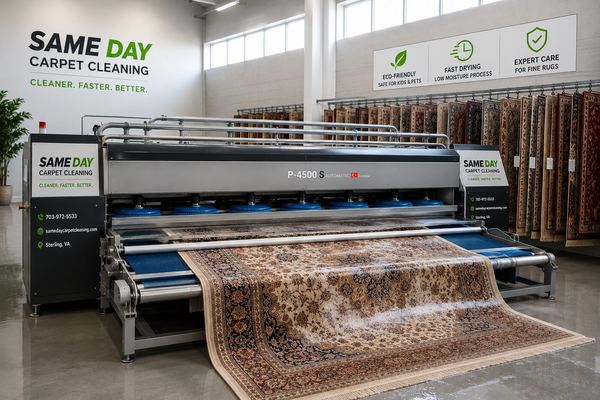
Patterned wool area rug being cleaned on a rug-washing machine in a cleaning plant, with more rugs hanging on racks to dry

FAQ

Jute and Sisal Rug Questions

No. Steam cleaning, also called hot water extraction, puts too much water into jute. The rug can turn brown, shrink and grow mildew. Jute and sisal should be cleaned with low-moisture methods.

Jute holds natural brown compounds. When the fiber gets wet and dries slowly, they move to the surface and leave a tan or brown ring. Using less water and drying the spot fast with a fan helps prevent it. A pro can often lighten the ring, but not always remove it.

No. Soaking a jute or sisal rug makes it heavy, weak and very slow to dry, and it often comes back brown, wavy or smaller. Only rugs labeled as synthetic or indoor/outdoor should be washed with water.

Vacuum it every week, and more often in busy rooms or homes with pets. A professional low-moisture cleaning about once a year keeps most rugs in good shape. Clean spills right away.

Book a Cleaning

Keep Your Natural Rug Looking Its Best

We are a family-run team cleaning Long Island homes since 2005, from Huntington, Huntington Station and Melville to Dix Hills, Northport, Commack, Greenlawn, Centerport, Cold Spring Harbor and Halesite. We are open 24 hours, 7 days, with same-day and overnight appointments, and every job is backed by our 100% satisfaction guarantee. Call or text (631) 230-0840, or send us a message. Book online and get $20 off with code SAVE20.

Related Service

Book This in Huntington

Area Rug CleaningHuntington, NY — open 24 hours, quoted before work starts.
Pet Stain & Odor RemovalHuntington, NY — open 24 hours, quoted before work starts.

See our Google Business Profile, hours and directions →

Keep Reading

More From Our Blog

When Steam Cleaning Is the Wrong ChoiceFive situations where steam cleaning causes damage rather than fixing anything, and what should be used instea…
What a Rug Pad Actually DoesRugs on hard floors wear from underneath where you cannot see it. What a pad prevents, and which pad materials…
Why Wool Rugs Go Off SiteImmersion washing, controlled flushing and flat drying cannot be done on a living room floor. What actually ha…

See all 52 cleaning guides →