Call Now 24/7
(631) 230-0840

Huntington & Long Island — Answered 24 Hours a Day

How to Clean Carpeted Stairs:
Edges, Corners and Runners

Stairs take more foot traffic per inch than any other carpet in the house, and the dirt hides in the edges and corners. Here is how to clean carpeted stairs safely at home, what to avoid on runners, and when Huntington stairs need a professional.

Get Your Free Estimate

Open 24 Hours · Huntington, NYIICRC Certified · Since 2005
$20OFF
Online Booking Offer

$20 Off When You Book Online

New and returning customers — book online, or mention code SAVE20 when you call.

Call (631) 230-0840 Code: SAVE20

Carpet

Why Stairs Get Dirty Faster Than Floors

01

Every step takes the hardest hit in the house

In many Huntington, Commack and Dix Hills homes, the staircase is the carpet every person and pet crosses many times a day. A hallway spreads that traffic out. A staircase puts it on a strip a few inches deep, and each foot lands and pushes off in the same place.

That is why stairs look grey long before the bedroom carpet does. The dirt builds up in a few places:

  • The front edge (the nose). The carpet bends over the edge of each step, so the fibers open up and grab grit. This is where shoes scuff and where wear shows first.
  • The back corner. The line where the step meets the riser behind it collects dust, pet hair and sand. A full-size vacuum cannot reach it.
  • The sides by the wall and railing. Hands, pets and dust gather along the edges, and the strip next to the baseboard often turns darker in a straight line.
  • The top and bottom steps. These catch whatever comes off shoes at the landing, including winter salt and summer beach sand.

Gritty soil is sharp. When it is walked on, it cuts the fibers like fine sandpaper, and on stairs this happens faster because the pile is already bent over the edge. Hallways wear the same way, as we explain in why carpet traffic lanes turn grey.
02

What you see and what is causing it

Before you clean, take a close look at the steps. The problem you see tells you what will help:

What you seeLikely causeWhat helps
Grey or dark front edgesPacked-in grit and oily soil from shoes and socksRegular edge vacuuming, then a deep rinse
Dark line along the back cornerDust, hair and sand the vacuum missedCrevice tool every week, then a deep rinse
Dark strip near the wallFine dust pulled in by air moving past the edgeCrevice tool along the baseboard, then a deep rinse
Spot that comes back after cleaningSpill or pet accident soaked into the pad belowProfessional rinsing and extraction
Fuzzy, thin or flattened edgeWorn fibers, not dirtCleaning makes it look tidier but cannot rebuild the pile
Musty or urine smell on one stepPet accident in the pad, often near the top of the stairsPet odor treatment that reaches the pad

Step by Step

How to Clean Carpeted Stairs at Home

03

Vacuum from the top down, every week

  • Start at the top step and work down, so loose dirt falls onto steps you have not cleaned yet.
  • Use a handheld vacuum or the hose and tools of your regular vacuum. Do not balance an upright on the steps.
  • Run the crevice tool along the back corner and both sides of every step. This is where most of the hidden dirt lives.
  • Use the upholstery or brush tool on the flat part and the front edge. Go over the edge from a few directions to open the fibers.
  • Lift pet hair first with a damp rubber glove or a rubber broom, then vacuum it up.
04

Spot cleaning a single step

  1. Blot fresh spills right away with a white cloth. Press, do not rub.
  2. Test your cleaner in a hidden spot, like the inside corner of a step, and let it dry.
  3. Use a mild mix: a few drops of clear dish soap in a cup of lukewarm water.
  4. Apply lightly to the cloth, not straight onto the carpet, and blot from the outside of the spot inward.
  5. Rinse with a cloth dampened in plain water, then press with a dry towel. Soap left behind attracts new dirt.
  6. Dry it fast. Point a fan at the stairs. With good airflow, a small spot is usually dry within a few hours.
05

Using a small spot machine

A handheld spot cleaner with a narrow tool can freshen a few steps between professional cleanings. Keep passes quick, use more dry suction passes than wet ones, and do one step at a time. Rinse the surface; do not soak it.

Stair carpet usually sits on a thin pad that is stapled or tacked at every step. Water that gets through the carpet runs into that pad and the wood under it, where it dries slowly. As it dries, it can pull old stains back up to the surface. Our guide to rental machines versus professional cleaning explains why heavy wetting causes trouble.

06

Runners over wood stairs

Many older homes in Northport, Centerport and Cold Spring Harbor have a runner over painted or stained wood steps. Treat these with extra care. Runners are often wool, which reacts badly to strong cleaners and too much heat. Water that runs off the edge of a runner can mark the wood finish.

Keep your cloth damp, not wet, work away from the edges, and wipe drips off the wood right away. If the runner is valuable or hand-made, have it checked before you try anything stronger than vacuuming.

Avoid Damage

What NOT to Do on Carpeted Stairs

07

Mistakes we are often called to fix

  • Do not pour cleaner on the step and scrub. Scrubbing frays the front edge and spreads the stain. Blot instead.
  • Do not soak the stairs with a rental machine. Too much water reaches the pad and the wood, and stains wick back up as it dries.
  • Do not use bleach, strong oxygen cleaners or color-safe laundry products. They can leave light spots that cannot be fixed.
  • Do not walk on damp stairs in socks. Damp carpet on a step can be slippery. Hold the railing and keep traffic light until it is dry.
  • Do not cover a pet odor with spray fresheners. The smell comes back, often stronger on humid summer days near the harbor.

When to Call

Calling a Pro and What to Expect

08

When to call a professional

Weekly vacuuming and quick spot cleaning go a long way. Call us when:

  • The front edges stay grey even after careful vacuuming.
  • A spot keeps coming back in the same place after you clean it.
  • There is a pet accident, especially one that has soaked in or has a smell.
  • You have a wool or patterned runner and are not sure what is safe.
  • You are getting ready for holiday guests or a move and want the stairs to match the rest of the carpet.

For pet problems, our pet stain and odor removal service treats the pad, not just the top of the carpet.

09

What to expect from a professional stair cleaning

We vacuum each step first, corners and edges included, then pre-treat the front edges and any spots. Our IICRC-certified technicians clean stairs with our truck-mounted hot water extraction system and a small hand tool made for steps, so each step is rinsed and the water is pulled back out, without soaking the pad. We groom the pile so it dries evenly. Read more on our carpet steam cleaning page.

Be realistic about results. Most traffic soil, dark edges and food spots come out well. Old pet stains often get much lighter but may not fully disappear. Worn or fuzzy edges look neater, but cleaning cannot replace fiber that is gone. Our products are eco-friendly and safe for kids and pets, the stairs are usually dry within a few hours with good airflow, and you get an upfront quote before any work starts. Stairs can be cleaned alone or with the whole house; see our carpet cleaning page.

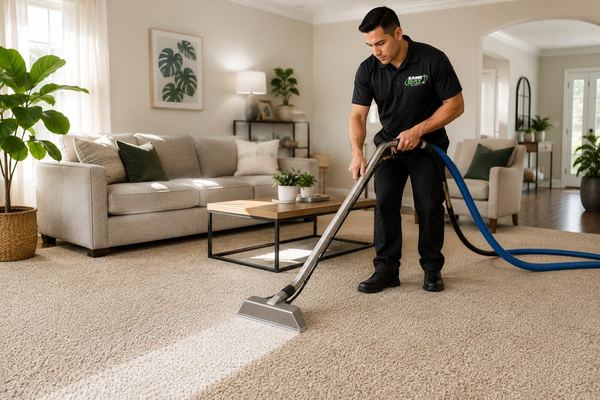
Technician using a hot water extraction hand tool to clean carpet in a Huntington, NY home

FAQ

Carpeted Stairs Questions

Only with a hand tool, and only with care. Full-size machines are hard to hold steady on a step and tend to put down too much water. A small hand tool, quick passes and extra dry suction passes keep the pad from getting soaked.

The carpet bends over the front edge of each step, which opens the fibers and lets them trap more grit. It is also where shoes scuff and push off. Regular vacuuming of the edges slows it down, and a deep rinse removes most of the buildup.

The stairs are usually dry within a few hours with good airflow. Until then, keep traffic light, hold the railing, and avoid socks, because damp carpet on a step can be slippery.

No. Fuzzing and thin spots on the front edge are worn fiber, not dirt. Cleaning removes the soil and makes the edges look neater, but it cannot rebuild pile that has worn away.

Book a Cleaning

Stairs Looking Grey? We Can Help

We are a family-run team cleaning Long Island homes since 2005, from Huntington, Huntington Station and Melville to Greenlawn, Centerport and Halesite. We are open 24 hours, 7 days, with same-day and overnight appointments. Call or text (631) 230-0840, or send us a message. Book online and get $20 off with code SAVE20.

Related Service

Book This in Huntington

Carpet CleaningHuntington, NY — open 24 hours, quoted before work starts.
Carpet Steam CleaningHuntington, NY — open 24 hours, quoted before work starts.
Pet Stain & Odor RemovalHuntington, NY — open 24 hours, quoted before work starts.

See our Google Business Profile, hours and directions →

Keep Reading

More From Our Blog

Why Traffic Lanes Turn GreyThe grey path through a hallway is often fibre damage, not dirt. How to tell the difference before paying for …
Rental Machine vs Professional CleaningHeat, pressure and vacuum recovery compared honestly. When a rental machine is genuinely fine and when it will…
Why Carpet Re-Soils After CleaningDetergent residue left in the pile attracts soil. Why a cleaned carpet can re-soil within weeks and how to tel…

See all 44 cleaning guides →