Call Now 24/7
(631) 230-0840

Huntington & Long Island — Answered 24 Hours a Day

Why Leather Sofas Crack
in Winter, and How to Stop It

Dry heat is hard on leather. Here is why leather sofas in Huntington and nearby towns stiffen and crack in the heating season, the early warning signs, the simple care that prevents it, and when it is time to call a pro.

Get Your Free Estimate

Open 24 Hours · Huntington, NYIICRC Certified · Since 2005
$20OFF
Online Booking Offer

$20 Off When You Book Online

New and returning customers — book online, or mention code SAVE20 when you call.

Call (631) 230-0840 Code: SAVE20

Leather

What Winter Does to a Leather Sofa

01

Why heated air dries leather out

Leather is a hide. During tanning, oils are worked into the fibers so they can bend and slide past each other. That oil and a little moisture are what keep a leather sofa soft.

Cold winter air holds very little moisture, and heating it makes the air in the room even drier. From November to March, homes in Huntington, Dix Hills and Commack run forced-air heat, baseboard heat or radiators most of the day. Many older homes in Northport, Centerport and Cold Spring Harbor also use a fireplace or wood stove. All of this pulls moisture and oil out of leather, slowly, week after week.

Homes near the harbor get a second problem: a big swing between seasons. Leather takes on moisture in the humid summer and gives it up in the dry winter. Every cycle of swelling and shrinking stresses the fibers and the finish. When the fibers get stiff, the leather cracks where it bends the most: the front edge of the seat, the top of the cushions and the inside of the arms.
02

Not all leather cracks the same way

How winter damage looks depends on the kind of leather you have. If you are not sure, our guide to pigmented, aniline and semi-aniline leather shows how to tell.

Leather typeHow winter damage showsWhat it needs
Pigmented (protected) — the most common sofa leatherFine hairline cracks in the color coating, first on the seat front and armsGentle cleaning and a light conditioner made for finished leather
Aniline — soft, natural look, no color coatingGoes stiff, dull and lighter in color; the hide itself can crackProducts made only for aniline leather; test first; often a job for a pro
Semi-aniline — thin protective coatDryness and fine cracks at flex pointsMild cleaner and conditioner, tested in a hidden spot
Bonded or “blended” leatherPeeling and flaking of the top layerThis is the surface coming apart. Conditioner will not fix it

Warning Signs

Catch It Before It Cracks

03

Signs your leather is drying out

  • It feels stiff or papery instead of soft and warm.
  • The color looks lighter or dull on the cushions closest to a vent, radiator or sunny window.
  • Fine lines appear when you press the seat and stay pale after you let go.
  • Creases stay put instead of relaxing after someone gets up.
  • Tiny flakes of color show up on the cushion seams or the floor.
04

A simple thumb test

Press your thumb firmly into the front edge of the seat cushion and look closely at the leather around it. Healthy leather wrinkles softly and then relaxes. Leather that is drying out shows sharp little lines, sometimes a lighter color in the creases. That is the moment to act. Cleaning and conditioning work well at this stage. Once the lines open into real cracks, they will not close again.

Check one side and compare it with the other. If the side near the heat is stiffer, the problem is the room, not the sofa, and moving it will help as much as any product.

At Home

What to Do This Winter

05

Simple steps that protect leather

  1. Move the sofa away from heat. Keep it a few feet from radiators, baseboard heaters, fireplaces and wood stoves. Use a vent deflector so forced air does not blow straight onto the leather.
  2. Block the low winter sun. The sun sits low in winter and shines deep into rooms. Close blinds or lined drapes on sunny afternoons. If your drapes are holding a season of dust, our drapes and curtain cleaning takes care of that too.
  3. Add some moisture to the air. A room humidifier helps leather, wood floors and people. A small humidity meter shows you when the air is getting very dry. Do not overdo it; you do not want water on windows or walls.
  4. Dust every week. Wipe with a dry, soft microfiber cloth. Dust is gritty and wears the finish in the creases.
  5. Clean, then condition. Use a cleaner and conditioner made for your leather type. Test in a hidden spot first. Apply a thin coat with a soft cloth, let it soak in, and buff off the extra. A few times a year is enough for most homes; the heating season is the time it matters most.
  6. Wipe spills right away. Blot with a dry white cloth. Let the spot air-dry at room temperature.
06

Where your sofa sits matters

Very often, the cracked side of a leather sofa is the side next to the window or the heat. A sofa under a bright window gets sun all day, and a radiator under that window adds dry heat on top. Even moving a sofa a short distance, or turning it so the back faces the window, can slow the damage a lot.

Fabric pieces in the same spot fade and wear too. If the room also has a fabric couch or chairs, our upholstery cleaning removes the dust and body oil that build up over the winter.

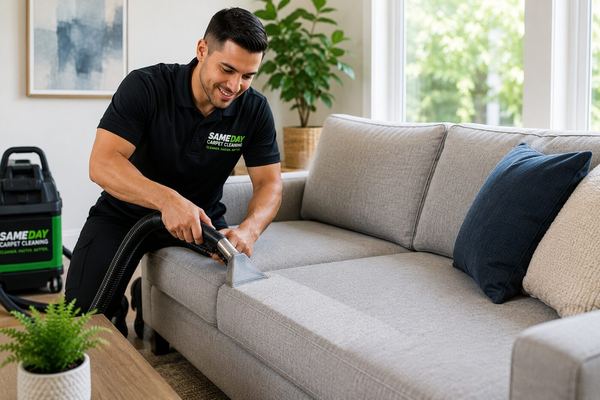
Light grey sofa beside a bright, sunny living room window being cleaned by a technician, showing how window placement exposes furniture to sun

Avoid These

What NOT to Do to Dry Leather

07

Common mistakes that make cracking worse

  • Do not use olive oil, coconut oil or other kitchen oils. They darken leather unevenly and can turn rancid inside the hide.
  • Do not clean with baby wipes or all-purpose sprays. They slowly strip the protective finish, and dry leather cracks even faster without it.
  • Do not use saddle soap. It is made for thick saddle and harness leather, not furniture.
  • Do not pile on conditioner. A heavy coat will not close a crack. It leaves the sofa sticky and pulls in dirt.
  • Do not dry a wet spot with a hair dryer or by the heater. Fast heat shrinks and stiffens leather.
  • Do not use a home steam cleaner on leather. Heat and moisture together can damage the finish and the hide.

Our guide to household products that damage leather covers more of the products to avoid and why.

When to Call

Calling a Pro and What to Expect

08

When to call a professional

Call us when:

  • The leather feels stiff all over, not just in one spot.
  • You see color lifting, flaking or wearing through on the arms or headrest.
  • The sofa feels sticky or shiny from years of store-bought dressings.
  • You have aniline leather, or you do not know what type you have.
  • Body oil has darkened the headrest and arms, or a pet has left stains.
  • Guests are coming for the holidays and you want the sofa ready in time. We are open 24 hours, 7 days, with same-day and overnight appointments.
09

What to expect from a professional cleaning

Our IICRC-certified technicians first identify the leather type and test the cleaner in a hidden spot. Then we clean the leather by hand with pH-balanced products, take out the body oil and old dressing, and apply a conditioner that matches the finish. You get an upfront quote before any work starts. See our leather cleaning page for the full process.

Be realistic about results. Cleaning and conditioning bring back softness and slow down new cracking. They cannot close cracks that are already there, or bring back color that has worn through. That needs a leather repair specialist, and we will tell you honestly if your sofa has reached that point. The sofa is usually ready to use within a few hours with good airflow. Our products are eco-friendly, non-toxic, and safe for kids and pets.

FAQ

Winter Leather Care Questions

No. Conditioner brings back softness and helps stop new cracks, but it cannot close cracks that are already there. Existing cracks and worn-through color need a leather repair specialist.

For most homes, clean and condition a few times a year, with one treatment at the start of the heating season. Use a thin coat of a product made for your leather type. Too much conditioner makes leather sticky.

Yes. A humidifier puts back some of the moisture that heating takes out of the air, which helps leather stay soft. Keep it a few feet from the sofa, and do not let the room get damp.

It is better not to. Direct heat dries leather much faster than the rest of the room. Keep the sofa a few feet away from fireplaces, radiators, baseboard heaters and vents.

Book a Cleaning

Keep Your Leather Soft All Winter

We are a family-run team cleaning Long Island homes since 2005, from Huntington, Huntington Station and Melville to Dix Hills, Northport, Commack, Greenlawn, Centerport, Cold Spring Harbor and Halesite. We are open 24 hours, 7 days, with same-day and overnight appointments, and every job is backed by our 100% satisfaction guarantee. Call or text (631) 230-0840, or send us a message. Book online and get $20 off with code SAVE20.

Related Service

Book This in Huntington

Leather CleaningHuntington, NY — open 24 hours, quoted before work starts.
Upholstery CleaningHuntington, NY — open 24 hours, quoted before work starts.

See our Google Business Profile, hours and directions →

Keep Reading

More From Our Blog

Identifying Your Leather TypeThe water-drop test takes ten seconds and determines everything about how a leather sofa can be cleaned.…
Products That Damage Leather FurnitureBaby wipes, olive oil, saddle soap and silicone dressings all cause damage that shows up months later. What to…
Denim Dye Transfer On Light LeatherIndigo migrates from jeans into leather finish, worst on cream and white. Why it happens, what removes it, and…

See all 50 cleaning guides →