Call Now 24/7
(631) 230-0840

Huntington & Long Island — Answered 24 Hours a Day

How to Clean a Microfiber Couch:
Without Water Rings

Microfiber sofas are tough, but cleaning them the wrong way leaves water rings, stiff patches and color loss. Here is how to read the cleaning code, clean spots safely at home, what to avoid, and when a Huntington sofa needs a professional.

Get Your Free Estimate

Open 24 Hours · Huntington, NYIICRC Certified · Since 2005
$20OFF
Online Booking Offer

$20 Off When You Book Online

New and returning customers — book online, or mention code SAVE20 when you call.

Call (631) 230-0840 Code: SAVE20

Upholstery

What Makes Microfiber Different

01

A tough fabric that is easy to clean the wrong way

Microfiber is one of the most common sofa fabrics we see in Huntington, Commack, Dix Hills and Melville homes. It is made from very fine polyester (sometimes blended with nylon) packed into a tight, soft weave. It stands up to kids and pets, and a fresh spill often beads up for a moment before it soaks in.

The same fine, dense fibers cause most of the trouble people run into when they clean it at home:

  • Water rings. When a damp spot dries, moisture moves to the edge and carries dissolved soil and minerals with it.
  • Stiff, crunchy patches. The soft “suede” feel comes from a raised surface, or nap. Soap residue and drying flat glue the fibers down, so the cleaned area feels hard and looks darker or lighter than the rest.
  • Oil that does not show until it is heavy. Body oil and hair products build up on arms and headrests and turn into a shiny, dark band over time.
02

Read the cleaning code before anything touches it

Look for the tag under the seat cushions or on the deck under them. The letter on it tells you which cleaners are safe. Many microfiber sofas are “S” code, but plenty are “W” or “WS”. Our guide to sofa cleaning codes goes deeper. The short version:

CodeWhat it meansSafe home approach
WWater-based cleaners are safe.A small amount of mild soap and water, applied lightly, then rinsed and blotted.
SSolvent only. Water can leave rings or change the color.Plain rubbing alcohol (isopropyl), sprayed lightly, after a hidden-spot test.
WSWater or solvent can be used.Start with alcohol for light marks. Use mild soap and water for food or drink spills.
XVacuum or brush only.Vacuum and brush. Anything more is a job for a professional.
No tagUnknown dyes and finishes.Treat it as S and test a hidden spot first.

Step by Step

How to Clean a Microfiber Couch at Home

03

Routine care that prevents most problems

  • Vacuum the sofa every week or two with the upholstery tool. Grit works into the weave and wears the nap down.
  • Lift pet hair with a damp rubber glove or a lint roller before you vacuum.
  • Flip and rotate loose cushions so one seat does not take all the wear.
  • Blot spills at once with a clean white cloth.
04

Spot cleaning with rubbing alcohol (S and WS codes)

  1. Vacuum the area first so you are not turning dry dust into mud.
  2. Test in a hidden spot, such as the back or under a cushion. Let it dry fully and check for color change.
  3. Mist lightly with plain isopropyl alcohol from a spray bottle. Damp, not wet.
  4. Wipe with a white sponge or cloth in one direction. Colored sponges can transfer dye.
  5. Work the whole panel from seam to seam, not just the spot, so there is no edge to form a ring.
  6. Brush when dry with a soft-bristle brush in small circles to raise the nap and soften the fabric again.

Alcohol is flammable. Open a window and keep it away from candles and heaters.

05

Water-based spot cleaning (W and WS codes)

Mix about a quarter teaspoon of clear dish soap in a cup of lukewarm water. Mist it on lightly, blot from the outside of the spot toward the center, then mist with plain water and blot again to rinse. Skipping the rinse leaves soap in the fabric, and soap attracts new dirt.

Press a dry towel on the area, run a fan across the sofa, and brush the nap once it is dry. With good airflow, a lightly cleaned spot is usually dry within a few hours.

06

Fixing water rings and stiff spots

A ring usually means the fabric got wet in one small area and dried from the outside in. The fix is to clean the full panel evenly with the method that fits the code, then feather the edges with a lightly misted cloth so there is no hard line. Brushing the nap after drying takes care of most stiff or crunchy spots.

If a ring comes back after two careful tries, or the spot looks lighter, stop. More product usually makes it worse.

Avoid Damage

What NOT to Do on Microfiber

07

Common mistakes we are called to fix

  • Do not soak the cushion. Water that reaches the foam takes a long time to dry and pulls stains back up to the surface.
  • Do not use water on an S-code sofa, and do not use a handheld steamer on one either.
  • Do not machine wash zip-off cushion covers. Zippers are there to fit the foam, not for laundry. Covers can shrink, fade and stop matching the rest of the sofa.
  • Do not use bleach, hydrogen peroxide or strong oxygen cleaners. They can strip the color along with the stain.
  • Do not scrub hard with a stiff brush while the fabric is wet. Wet fibers crush and fray easily.
  • Do not use a hair dryer on high heat to speed things up. Polyester fibers can glaze and turn shiny.

Pets & Body Oil

The Two Problems Home Cleaning Rarely Fixes

08

Pet accidents and odor

Microfiber is a good fabric for pet owners on the surface, but urine does not stay on the surface. It goes through the fabric into the cushion foam and the frame padding. Blot as much as you can right away with a dry white towel, pressing firmly, and do not add cleaners you have not tested.

If the odor comes back on humid summer days near the harbor, the contamination is deeper than a spot cleaner can reach. That needs proper pet stain and odor removal, which treats the cushion, not just the cover.

09

Dark arms and headrests

The darker band on arms and seat backs is mostly skin oil, lotion and hair product mixed with dust. Alcohol helps with light buildup, but heavy oil needs a cleaner made to break down grease, plus a proper rinse.

Our guide to body oil on sofa arms and headrests explains why these areas wear first.

When to Call

Calling a Pro and What to Expect

10

When to call a professional

Home care is fine for routine upkeep and small, fresh spots. Call us when:

  • A ring or stain is still there after two careful attempts.
  • The sofa has an X code, or no tag and you are not sure what the fabric is.
  • There is pet urine, vomit or an odor you can smell from across the room.
  • Arms, headrests and seat cushions are all darker than the back and sides.
  • The whole sofa looks dull and flat, or guests are coming.
11

What to expect from a professional cleaning

We start by checking the cleaning code, testing the dyes and looking at the stains. On W and WS microfiber, our IICRC-certified technicians use our truck-mounted hot water extraction system with a controlled upholstery tool, so the fabric is rinsed without soaking the cushions. On S-code fabric, we use a low-moisture solvent method instead.

Be realistic about results. Most soil, food spills and old rings come out well. Heavy oil improves a lot but may need a second visit. Fading from sun and color loss from bleach or strong cleaners cannot be reversed. Our products are eco-friendly and safe for kids and pets, the sofa is usually dry within a few hours with good airflow, and you get an upfront quote before any work starts. Learn more on our upholstery cleaning page.

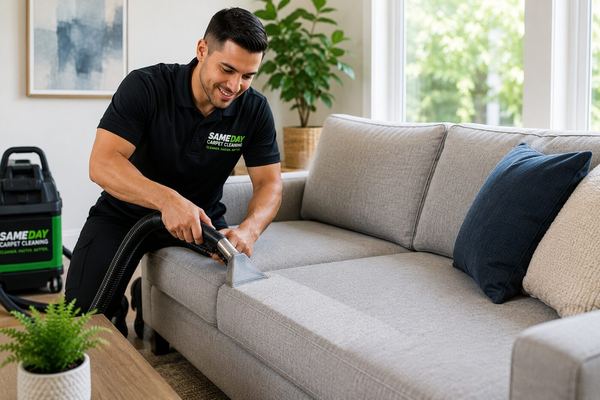
Technician cleaning a microfiber sofa cushion with an upholstery tool in a Huntington, NY living room

FAQ

Microfiber Couch Questions

No. Rubbing alcohol is a good choice for many S and WS microfiber sofas, but not every fabric. Some dyes can lighten, and X-code fabric should not be cleaned with any liquid. Always test a hidden spot first and let it dry before you clean a visible area.

The fibers dried matted together, often with a little soap or dirt left in them. Once the fabric is fully dry, brush it in small circles with a soft-bristle brush. If it still feels stiff, there is probably residue that needs a light rinse.

We do not recommend it, even when the covers have zippers. They can shrink, fade or lose their shape and stop fitting the foam. Spot clean them on the sofa or have them cleaned professionally.

For most homes, every one to two years is a good rhythm. Homes with pets, young children or a sofa that gets daily use may want it cleaned once a year.

Book a Cleaning

Microfiber Sofa Looking Tired? We Can Help

We are a family-run team cleaning Long Island homes since 2005, from Huntington and Northport to Greenlawn, Centerport, Cold Spring Harbor and Halesite. We are open 24 hours, 7 days, with same-day and overnight appointments. Call or text (631) 230-0840, or send us a message. Book online and get $20 off with code SAVE20.

Related Service

Book This in Huntington

Upholstery CleaningHuntington, NY — open 24 hours, quoted before work starts.
Pet Stain & Odor RemovalHuntington, NY — open 24 hours, quoted before work starts.
Carpet CleaningHuntington, NY — open 24 hours, quoted before work starts.

See our Google Business Profile, hours and directions →

Keep Reading

More From Our Blog

Sofa Cleaning Codes What W, S, WS and X MeanThe W, S, WS and X tag on your sofa decides how it can be cleaned. What each code allows, where…
Body Oil on Arms and HeadrestsArms and headrests fail before the rest of a sofa does. Why skin oil behaves differently from ordinary…
How Long Does a Couch Take to Dry?Realistic drying times for a cleaned sofa, what makes them longer, and why a couch that is still…

See all 43 cleaning guides →